Loïc Lepiniec: an architect of plant biology, from genomes to seeds
Loïc Lepiniec is an agricultural engineer who became a biologist. He is now a research director at INRAE, where he heads up the SeedDream team at the Jean-Pierre Bourgin Institute (IJPB – Université Paris-Saclay/INRAE/AgroParisTech). A specialist in seed biology and the regulatory networks that govern their development, he has contributed to the structuring of plant sciences in France. He has also been involved in the creation of the Paris-Saclay campus, from the establishment of laboratories of excellence (LabEx) and their communities to recent institutional developments.
As a child, Loïc Lepiniec was drawn to forests and nature. He began his scientific studies at Université Paris-Sud (now Université Paris-Saclay) in Orsay and enrolled at the National School of Agronomy in Nancy without really knowing whether this path would lead him to biology, economics, or something completely different. His vocation became clear during a three-month internship at a laboratory in Urbana-Champaign in the United States, where he worked on Agrobacterium, the bacterium that enabled the first genetic transformations of plants. "That internship was a turning point for me: I realised there that I wanted to devote myself to biology." He returned to France and went back to the Université Paris-Sud campus in Orsay to study for a DEA (equivalent to a Master's degree today) in plant biology. He then began a PhD thesis in 1990 on photosynthesis in C4 plants, in particular sorghum. After completing his PhD, he went on to do postdoctoral research in Ghent, in Belgium, in the team of Marc Van Montagu, who is one of the pioneers of plant transgenesis. “Those early years opened my eyes to the diversity of approaches, from biochemistry to genetics, and gave me a taste for fundamental questions," he says.
Understanding seeds: a shaping scientific journey
He joined INRA (now INRAE) in Versailles in 1994, where he worked with Michel Caboche, who was a leading figure in French plant genetics, to help set up a seed biology lab. In 2010, this lab became part of the Jean-Pierre Bourgin Institute. Together with several colleagues, with whom he still works, he developed a scientific program that profoundly renewed the understanding of seed development. "For more than 20 years, we have been working to build genetic and genomic resources - more than 2,000 Arabidopsis thaliana mutants and the FST program (40,000 insertion sequences)—that reveal the molecular architecture of the seed. "His work shed light on Transparent Testa (TT) genes, the TT2-TT8-TTG1 complex, and the LAFL network (LEC1, ABI3, FUS3, LEC2) network, which are the pillars of flavonoid biosynthesis (antioxidant molecules produced by plants), embryonic maturation, and lipid synthesis regulation. For Loïc Lepiniec, “the seed remains one of the most intriguing biological systems to study."
From fundamental research to agroecology: broadening the field of applications
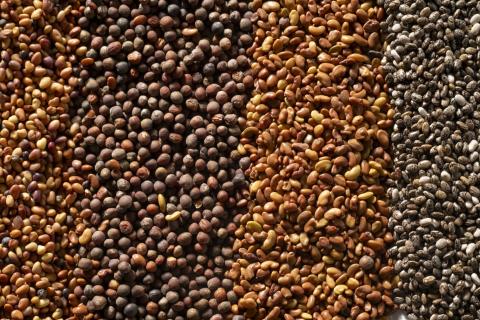
After many years of fundamental research, Loïc Lepiniec decided about ten years ago to apply the knowledge he had acquired about Arabidopsis thaliana to agroecology. From being primarily fundamental, his research then shifted towards a more applied approach. "My team and I are now exploring cultivated but still undervalued plants such as camelina, lentils, amaranth, and hemp to improve the quality and composition of their seeds." By working on lipids, proteins, and specialized metabolites, Loïc Lepiniec is helping to develop species that are more resilient and better adapted to agricultural transitions. In doing so, he is continuing an approach that combines fundamental breakthroughs with concrete benefits for production systems.
Teaching, a constant commitment
Alongside his research activities, Loïc Lepiniec has always been passionate about teaching, and not just in the biology master's program. From 2010 to 2021, he taught extensively at École Polytechnique. In addition to courses in molecular and cellular biology, he offered students a structured course on biotechnology at a time when scientific and societal controversies surrounding transgenesis were rife. "I felt it was essential for future executives to be trained in these issues," he explains. Today, he is still a consulting professor at AgroParisTech, teaching mainly on his research topics.
Taking on national responsibilities and leading structuring projects
Another key milestone in Loïc Lepiniec's career is his commitment to serving the community. Spotted for his scientific dynamism, in 2006 he was appointed head of INRAE's plant biology department - eleven laboratories nationwide - at the request of Marion Guillou, who was CEO of INRA at that time. He describes this experience as "intense and extraordinary," enabling him to "bring together very different teams around a common vision." However, it was with the creation of the Laboratories of Excellence (LabEx) as part of the Investments for the Future program that his role took on a new dimension. He designed and directed the Saclay Plant Sciences (SPS) LabEx, which today brings together nearly 700 people from five institutes. He turned it into an internationally recognized center of excellence, combining research, training, and innovation. This LabEx was extended in 2018 with the SPS Graduate School of Research, which he also leaded. "The idea was really to structure a community and create a sustainable dynamic," he summarizes. In 2021, at the request of INRAE CEO Philippe Mauguin, and despite an already busy schedule, he accepted the position of INRAE regional delegate for the Île-de-France region. This strategic role combined research, teaching, and regional development challenges in the Paris-Saclay area. He held this position for four years while continuing to lead his team and LabEx/EUR, before stepping down to concentrate again on research and teaching.
A key player in the construction of Université Paris-Saclay
One constant emerges from all the commitments of Loïc Lepiniec: the desire to build. This means building knowledge, teams, networks, projects, and robust, open institutions capable of taking French plant biology to the highest level. "I have always been convinced of the need for closer structural ties between universities, research organizations, and engineering schools in order to facilitate synergies between research, education, and innovation," explains the researcher. For him, the Paris-Saclay campus has become one of the few ecosystems able to bring together an exceptional critical mass in plant sciences— Université Paris-Saclay, UVSQ, Université d'Évry, AgroParisTech, INRAE, CEA, and CNRS - and to foster collective dynamics that are unique in France. Beyond these strategic considerations, Loïc Lepiniec acknowledges that his commitment to this ecosystem also stems from a form of personal loyalty to a region where he has lived his entire life. "I studied there, developed my work and taught there, my children went there, my wife teaches there. In short, I am deeply attached to it," he confides.
Rediscovering the long term in research
After shouldering so many responsibilities, Loïc Lepiniec has now chosen to devote himself once again to what has always been his driving force: understanding the hidden mechanisms of life. He is therefore continuing his research into the genetic and epigenetic control of seed development, while also leading new collective projects. "What drives me today is rediscovering the long time frame of science, where we can return to fundamental questions," he says, convinced that an in-depth understanding of seeds continues to open up new avenues, both for research and for future agricultural transitions.
